Understanding Certifications: How to Read Mattress Labels for Safer Sleep
A practical, thoughtful exploration of the labels that decorate modern mattresses—GOTS, GOLS, CertiPUR-US, and their many peers—and what they truly signify about safety, environmental impact, and performance. This is not a catalog of logos, but a careful map to greener choices for sleepers who care about what touches the skin and what travels through the supply chain.
The mattress market has long thrived on brand identity, marketing narratives, and the lure of a deeper night’s rest. Yet beneath the surface lies a meshwork of certifications—independent attestations, third-party tests, and standards that attempt to translate materials and processes into measurable safety and environmental responsibility. For Green Mattress, the aim is to present a reader-friendly guide that helps you compare products beyond brand names, to understand what claims really mean, and to recognize both the power and the limits of certifications.
In the spirit of evergreen education, this piece tracks three distinct voices across time: a 19th-century naturalist whose insistence on observational rigor foreshadowed modern testing regimes; a mid-20th-century consumer advocate who pressed for transparent labeling; and a 21st-century materials scientist whose work anchors today’s certification standards. Read alongside practical checklists and a curated glossary, the article seeks to empower readers to sleep safer and greener.
Why Certifications Matter in Bedding
Certifications serve as signposts on a difficult terrain: the bedding industry spans agricultural inputs, chemical formulation, textile manufacturing, and complex supply chains. For the consumer, certifications are not perfect talismans; they are useful anchors that help translate vague marketing claims into testable promises. When shopping, readers should ask:
- What materials are certified, and by whom?
- Do the certifications cover the entire product or only components?
- What criteria are used to judge safety, chemical emissions, and environmental impact?
- Are there independent tests or third-party verifications beyond the certifying body?
- What are the limitations or caveats of each certification?
The three anchor questions above help move beyond superficial logos into meaningful contrasts—especially when comparing products that may otherwise appear similar. The following sections introduce the core certifications most readers will encounter, unpack what they cover, how they’re earned, and where their limits lie.
Core Certifications in the Mattress Industry
GOTS (Global Organic Textile Standard)
GOTS is widely regarded as the gold standard for organic textiles, including textiles used in bedding. It assesses both fiber content and the environmental and social responsibility of the supply chain. Two notable implications for mattresses: (1) if a mattress cover or other textile layer is GOTS-certified, you are likely buying a product that uses organic fibers with strong social and environmental protections; (2) GOTS certification is rarely, by itself, a blanket guarantee for the entire mattress, because core components like foams or springs may not be covered by GOTS.
GOLS (Global Organic Latex Standard)
GOLS certifies organic latex at the raw material level, with requirements for cultivation, harvesting, processing, and environmental stewardship. For latex mattresses, a GOLS certification signals that the latex layers meet rigorous organic standards, reducing risks associated with chemical residues and synthetic additives. As with GOTS, though, GOLS-certified latex does not automatically certify other components, such as the cover, flame barriers, or base materials.
CertiPUR-US
CertiPUR-US is the most widely recognized independent certification for polyurethane foam. It tests for indoor air emissions (low VOCs), content restrictions (no ozone-depleting gases, no prohibited CFCs), and the presence of harmful substances such as heavy metals or certain flame retardants. It is a valuable benchmark for foam safety, particularly in hybrid or all-foam mattresses. Importantly, CertiPUR-US does not assess the entire product lifecycle or the environmental impact of the other materials used in a mattress.
Other certifications and labels
Beyond GOTS, GOLS, and CertiPUR-US, a range of eco-labels and safety certifications can appear on bedding and components. Some certifications address fire safety without chemical flame retardants, others verify pesticide-free farming practices for cotton, and others still focus on the absence of specific toxic substances. Readers should consider whether a certification applies to the materials you care about most—organic fibers, low-VOC foams, or non-toxic flame barriers—and whether it covers the full product or only subcomponents.
Certification ecosystems are dynamic. New standards emerge as scientific understanding evolves, while some programs adapt to supply chain shifts or regulatory changes. The prudent shopper remains curious: when a claim sounds especially compelling, look for the following corroborations:
- Independent third-party testing results published publicly.
- Cross-verification by multiple certification bodies or consumer advocacy groups.
- Clear labeling of what is certified and what remains outside the certification’s scope.
How to Evaluate Claims in Practice
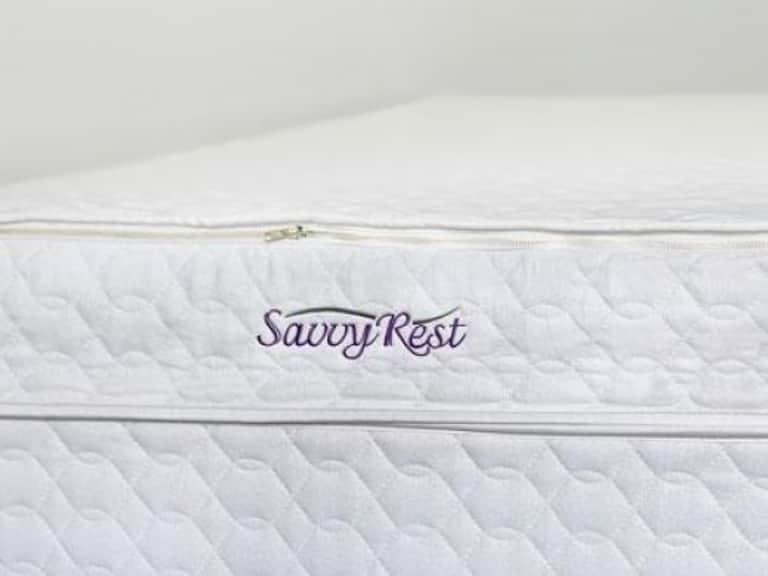
When you’re exploring a product such as the Savvy Rest Tranquility Latex Mattress, which is built from organic wool, organic cotton, and natural latex, certifications can help you triangulate safety and sustainability. Yet the label on the mattress cover may not tell you everything about the foam layer, edge support, or the flame barrier. Here are practical steps to read labels thoughtfully:
- Identify the certified materials: Is the latex certified to GOLS? Are the textiles GOTS-certified?
- Check the scope: Does the certification apply to the entire product or only specific components?
- Investigate the test standards: What emissions limits (VOC or formaldehyde, for example) are used? Which test methods were employed?
- Look for end-to-end transparency: Are test results publicly accessible? Are there independent corroborations or reviews?
- Assess the lifecycle: How are the materials sourced, manufactured, and disposed of? What is the environmental footprint across the supply chain?
The savviest shoppers adopt a multi-source approach: a certification banner, validated third-party tests, and independent reviews from consumer advocates or researchers. Remember that a label is not a verdict on every dimension of a product; it is a signal, a piece of a larger conversation about safety, health, and ecological responsibility.
Three Key Voices Across Time
John James Audubon (1785–1851)
A naturalist whose insistence on careful observation laid groundwork for empirical thinking.
Audubon’s habit of documenting the natural world with meticulous attention foreshadowed the modern insistence on traceability and evidence. While not a mattress-character by any stretch, his ethos—systematic note-taking, correlative reasoning, and a respect for observable data—echoes in today’s certification regimes. In the context of bedding, his spirit reminds us to demand data about materials and processes, not just marketing claims.
Upton Sinclair (1878–1968)
A journalist and reformer who championed transparency in consumer goods through exposés and public debate.
Sinclair’s investigative impulse is a lodestar for modern shoppers in search of truth behind claims in the bedding industry. The careful reader should seek out independent testing data, question undisclosed chemical formulations, and advocate for labeling that makes the full story accessible to non-specialists. In the Green Mattress world, Sinclair’s legacy invites a critical gaze toward the labyrinth of supply chains that yield the certified components we so often take at surface value.
Donna J. Haraway (born 1944)
A scholar-prophet of the entangled world where humans, technology, and nature intersect.
Haraway’s emphasis on interconnected systems invites readers to see certifications not as solitary shields but as components within a broader ecological and social landscape. In mattress certification discourse, this means recognizing how certification standards interact with labor practices, farming ecosystems, and chemical safety narratives. A holistic reader will consider not only what is certified, but how the production of certified materials contributes to or mitigates environmental disruption.
Practical Guides and Cross-References
For readers who want to convert theory into action, consider a compact set of evergreen guides. These articles can be adapted for a future Green Mattress site—directional, evidence-based, and focused on empowerments rather than endorsements:
- How to read mattress certifications: a consumer’s glossary and quick-reference sheet.
- Understanding the limits of certifications: what they cover and what they omit.
- Material-by-material guides: organic cotton, latex (GOLS), wool, and foam safety.
- Room and product pairing: how to choose textiles and protectors that align with green certifications.
- Independent testing resources and how to interpret test results in plain language.
The goal is not to paralyze decision-making with complexity but to create a reliable, navigable framework. Certification literacy is a form of sleep hygiene for the conscientious consumer: you know what matters, you know what you don’t, and you know where to look for more information when questions arise.
Glossary: Core Terms You’ll Meet
- GOTS
- Global Organic Textile Standard; organic textiles with environmental and social criteria across the supply chain.
- GOLS
- Global Organic Latex Standard; organic latex processing and supply chain requirements.
- CertiPUR-US
- Independent foam certification focused on emissions, content, and safety of polyurethane foam.
- VOC
- Volatile Organic Compounds; emissions that can affect indoor air quality.
- Flame barriers
- Fire protection layers; some may be chemical-free or natural, not all use flame retardants.
Product Focus: Savvy Rest Tranquility Mattress as a Case Study
The Savvy Rest Tranquility Latex Mattress offers two layers of natural latex, a wool flame barrier, and an organic cotton cover. It is a living example of how a product can align with organic and natural certification goals, while simultaneously illustrating the layered reality of certification scopes. In such mattresses, readers should assess not only latex certification (GOLS) but also the textile certifications of the cover, the sourcing of wool, and any other materials involved in the composition.
The Tranquility is a useful touchstone for understanding how multiple certifications can converge in a single product. You may find GOLS-certified latex, GOTS-certified cover fabrics, and other certifications in tandem. This multipronged approach often yields a product that adheres to environmental and health standards across major components, but it also requires readers to examine each certified part to see how the product behaves as a complete system.
For a broader education in green sleep, consider how the Tranquility’s materials—organic wool, organic cotton, and latex—interact with performance goals like temperature regulation, breathability, and pressure relief. Certifications become meaningful when read in concert with consumer needs: allergy considerations, skin sensitivity, and environmental values. The reader should ask: does a mattress deliver on the promises its certifications imply? And if not, what additional information would bridge the gap?
Note on imagery: Product visuals and logos often accompany these discussions. If you’re building a site that profiles green bedding, you may present product pages that show certification badges and tested data, but always pair them with a narrative that explains how to interpret the claims in everyday use.
A Reader’s Path Forward
For readers who want to deepen their understanding, consider a practical next step: assemble a personalized certification reference sheet for your next mattress or mattress protector purchase. Start with the core certifications discussed herein, then add any relevant labels from your region. Track the full product’s materials, testing reports, and the scope of certification. Your sleep, and the planet’s, may both benefit.
This article follows a New Yorker-inspired editorial cadence: thoughtful, descriptive, and with a focus on insight. The aim is to illuminate the path toward safer, greener sleep by translating certification discourse into usable guidance.
Certifications offer a framework for evaluating safety and environmental impact in the sleep environment. They are not a substitute for critical thinking, but they can greatly improve the odds of choosing products that support both personal well-being and ecological health. In a world where new materials, new labels, and new standards emerge with disarming speed, the most reliable course is anchored curiosity: ask questions, seek independent data, and remember that a well-made mattress is not only about a good night’s rest today but about a more sustainable world tomorrow.
About the Contributors
This exploration draws on a lineage of thinking about materials, safety, and transparency, from historical observers to contemporary technicians. The interweaving of voices across time—Audubon’s empirical scrutiny, Sinclair’s advocacy for honesty in labeling, and Haraway’s ecological sensitivity—helps frame a modern discourse about green bedding not as a static catalog of logos but as a living practice of informed choice.
A Starter Product Reference (Selected)
Savvy Rest Tranquility Latex Mattress is one highlighted product with a robust organic and natural-material core. It demonstrates how certifications can align with consumer values and practical comfort. For readers who want to explore concrete options, this product serves as a model of transparent material sourcing and a clear certification narrative.
Note: Product imagery and links are displayed on the product pages. The mattress shown here is a curated representative example to illustrate certification alignment. If you’d like, I can incorporate a dedicated product grid with certification badges, testing summaries, and link-outs to independent reports.